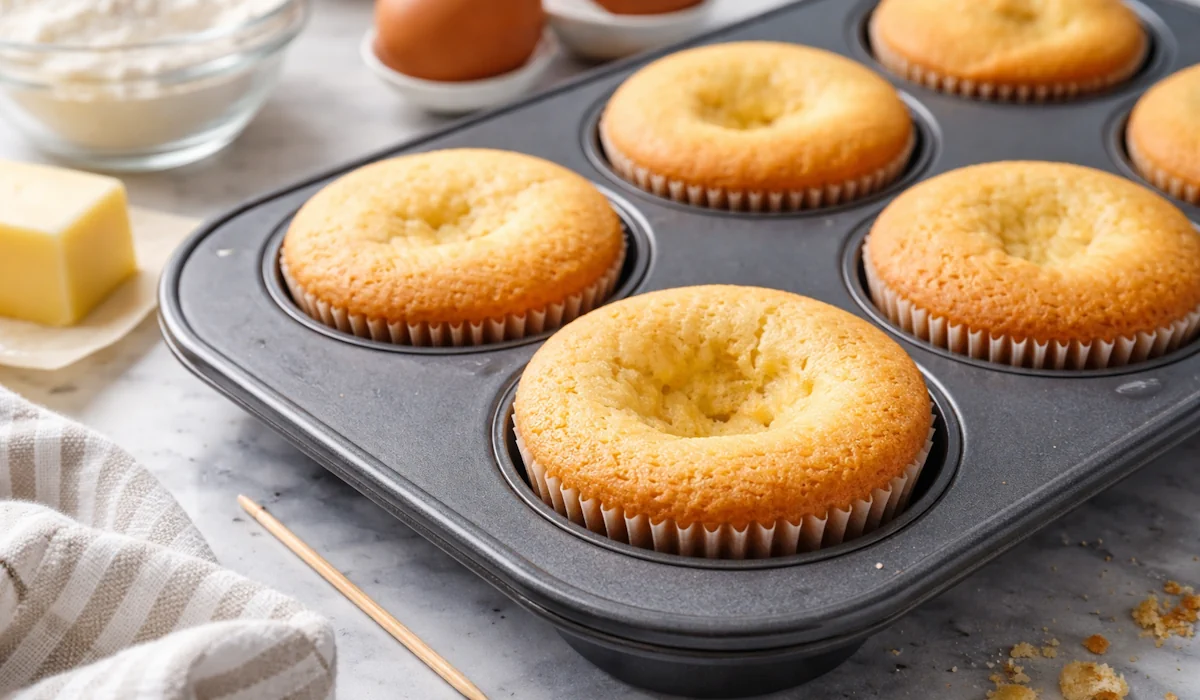
Why Do Cupcakes Sink in the Middle?
Why Do Cupcakes Sink in the Middle?
Few baking frustrations compare to lifting a tray from the oven and finding cupcakes collapsed in the centre. The tops dip. The crumb turns dense. The texture feels heavy rather than light. This issue stems from precise technical faults. Once you identify them, you can correct them immediately.
Below is a clear breakdown of the real causes and the exact fixes.
The Batter Was Overmixed
Overmixing ranks as the most common cause of sunken cupcakes.
When you beat flour too aggressively, you develop excess gluten. Gluten creates structure. Too much structure traps air unevenly. The cupcakes rise quickly in the oven, then collapse as the unstable structure fails.
Signs of overmixing:
- Tough texture
- Tunnels inside the crumb
- Peaked tops that sink after cooling
Fix it:
Mix only until ingredients combine. Stop as soon as you no longer see streaks of flour. Use medium speed, never high. Scrape the bowl. Then stop.
The Oven Temperature Was Incorrect
Cupcakes require steady heat. If the oven runs too cool, they rise slowly and lack structure. If it runs too hot, they rise fast, set too quickly on the outside, and collapse inside.
An oven dial lies more often than most bakers realise.
Fix it:
Use an oven thermometer. Bake cupcakes at 170–180°C (fan 160°C) unless your recipe states otherwise. Avoid opening the oven during the first 15 minutes of cooking. Sudden temperature drops cause immediate sinking.
Too Much Raising Agent
More baking powder does not mean better rise.
Excess baking powder or bicarbonate of soda forces rapid expansion. The batter balloons. Then the structure cannot support itself. The centre will cave in as it cools.
Measure precisely. Level teaspoons. Never guess.
If your cupcakes taste slightly metallic and sink, reduce the raising agent by ¼ teaspoon and test again.
The Cupcakes Were Underbaked
Cupcakes may look golden on top yet remain raw in the centre.
Underbaked batter collapses as steam escapes during cooling. The structure is never set fully.
Check properly:
- Insert a skewer in the centre. It must come out clean.
- Press lightly on the top. It should spring back.
- The edges should pull slightly from the case.
If unsure, bake for another two minutes. Precision matters.
Too Much Sugar or Liquid
Sugar weakens structure. Liquid adds weight. Too much of either leads to collapse.
Common causes:
- Adding extra milk
- Using large eggs instead of medium ones
- Overfilling cases
Fill cupcake liners only two-thirds full. This allows a controlled rise without spill or collapse.
The Batter Sat Too Long Before Baking
Once you combine wet and dry ingredients, the chemical reaction begins immediately.
If the batter rests on the counter while you prepare trays, the raising agent activates early. By the time the cupcakes reach the oven, they have lost power. They rise unevenly and sink.
Work efficiently. Preheat first. Line the tins first. Then mix.
Bake immediately.
You Opened the Oven Door Too Soon
Early disturbance causes structural failure.
Cupcakes rely on trapped steam during the first stage of baking. Open the door too soon, and you release heat and pressure. The centres drop before they set.
Wait at least 15–18 minutes before checking.
Incorrect Ingredient Temperature
Cold butter and eggs prevent proper emulsification. The batter splits. Air fails to incorporate evenly.
This leads to an uneven rise and fall in the middle.
Bring butter, eggs, and milk to room temperature before mixing. The batter should appear smooth and slightly fluffy, without curdling.
How to Prevent Cupcakes from Sinking Every Time
Follow these rules:
- Measure accurately using digital scales.
- Use room temperature ingredients.
- Mix briefly and gently.
- Preheat the oven fully.
- Avoid opening the door early.
- Bake until properly set.
- Fill cases two-thirds full.
Cupcakes sink when the structure fails. Structure fails due to an imbalance. Control temperature, measurements and mixing. The result will be evenly domed, light, and stable cupcakes every time.
Perfect cupcakes do not rely on luck. They rely on the method.